Backgrounds for Pet Portraits
Ideas and advice for choosing the best setting for your portrait
The background of a portrait plays a quiet but powerful role. It can create drama, softness, atmosphere or simplicity — and often determines whether a portrait feels timeless, romantic, lively or serene. Whether you are commissioning a portrait or you’re an artist looking for inspiration, there are three main background approaches I work with:
• Plain backgrounds
• Atmospheric backgrounds
• Scenic backgrounds
The first two are included as standard, and scenic backgrounds can be developed to suit the subject and setting (see my current price list for further information). Below, I’ll walk you through how each option works and how to decide which is the best background for your pet portrait.
Plain Backgrounds for Pet Portraits
When people search for backgrounds for portraits, they often assume that “plain” means simple or uninteresting. In reality, a well-chosen plain background is one of the most effective and elegant options available.
With a plain background, the key is tonal contrast. I carefully select a colour and mid-tone that allows the subject to stand forward clearly from the surface.

A mid-tone background with subtle warm shading can create stillness and focus in a dog portrait.
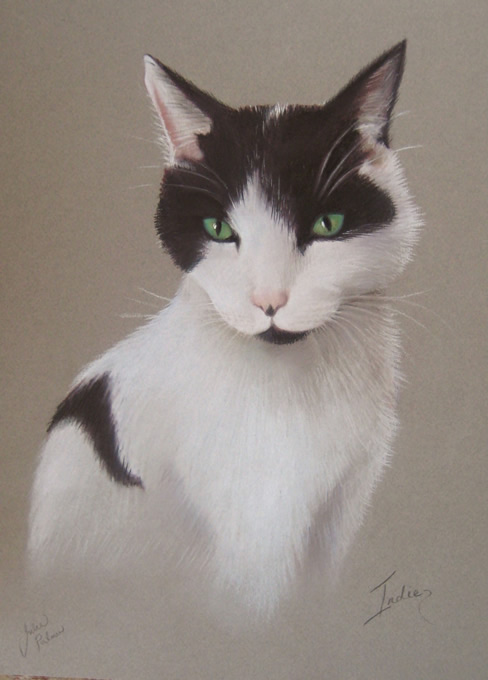
A neutral grey behind a cat allows the eyes and whiskers to shine with crisp clarity.

For a darker-coated horse, a soft grey mid-tone provides just enough contrast to define the mane and facial structure without distraction.
Plain backgrounds work beautifully for:
• Head and shoulders studies
• Formal portraits
• Memorial portraits
• Subjects with strong colouring or striking eyes
They are timeless and refined — often the best background for portraits where the personality of the animal is the sole focus.
Atmospheric Background Ideas
If plain backgrounds are about simplicity, atmospheric backgrounds are about mood. These are especially popular in dog portrait background ideas, as they can add depth and emotion without becoming fully scenic. I typically work on mid-toned paper and build layers of lighter or darker hues to gently surround the subject.
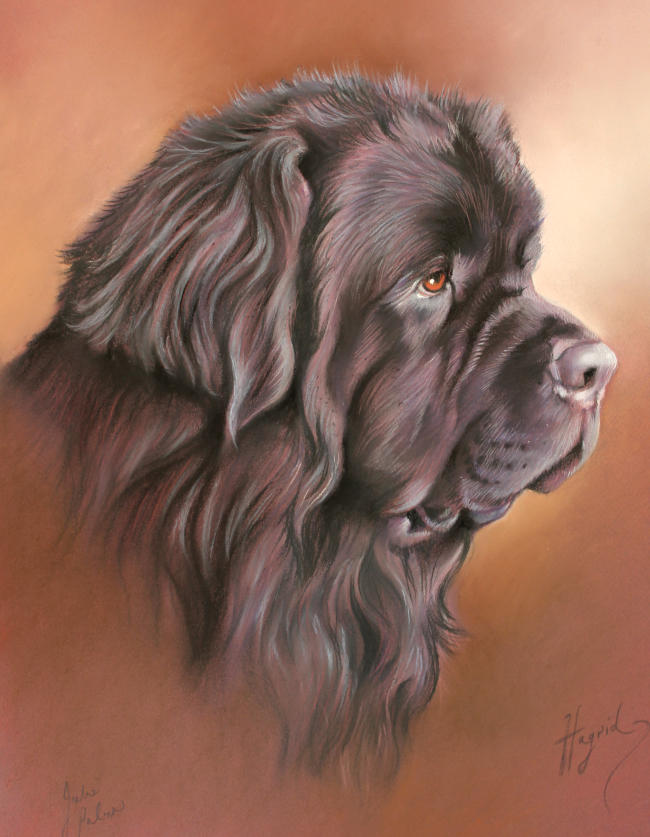
A rich, warm-toned background behind a dark-coated Newfoundland to counterbalance the depth of the fur.

A soft pink warmth behind a white cat to create contrast and a romantic glow.

A mottled blend of coat-inspired colours behind a horse, echoing the tones found within the subject itself.
Atmospheric backgrounds are ideal when you want:
• Drama without a specific location
• A painterly or romantic feel
• More depth than a plain background
• A cohesive colour harmony throughout the piece
For artists exploring portrait background ideas, this approach allows subtle experimentation with colour temperature and value while keeping the subject dominant.
Scenic Backgrounds for Dog and Pet Portraits
When clients think of backgrounds for dog portraits, they often imagine favourite walks, beaches, countryside paths or gardens. Scenic backgrounds bring a portrait to life with context and story.
These can be approached in several ways.
Impressionistic Scenic Backgrounds
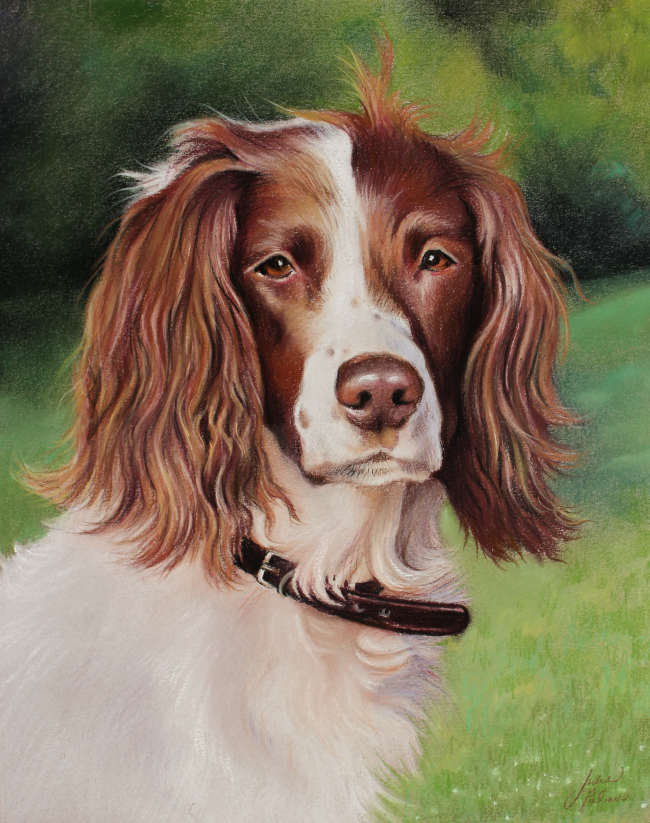
dog portrait with impressionistic scene
For head and shoulders portraits, I often suggest a soft, blurred scenic background. The setting is implied rather than detailed — the dog remains in sharp focus, while the surroundings feel fresh and atmospheric.
This works beautifully for:
• Spaniels in woodland tones
• Dogs in grassy settings
• Beach scenes with softened horizons
The key is that the subject remains the centre of attention.
Full Body Scenic Backgrounds
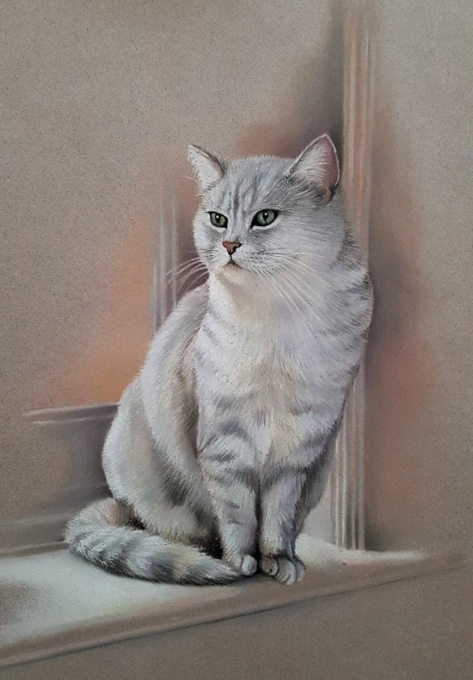
cat portrait with a subtle background
With full body portraits, the setting becomes slightly more important compositionally. However, I still tend to suggest a lighter touch — hinting at the environment rather than rendering every blade of grass.
A sketched or gently suggested background:
• Grounds the subject
• Prevents distraction
• Maintains elegance
Often, less is more.
Specific Locations
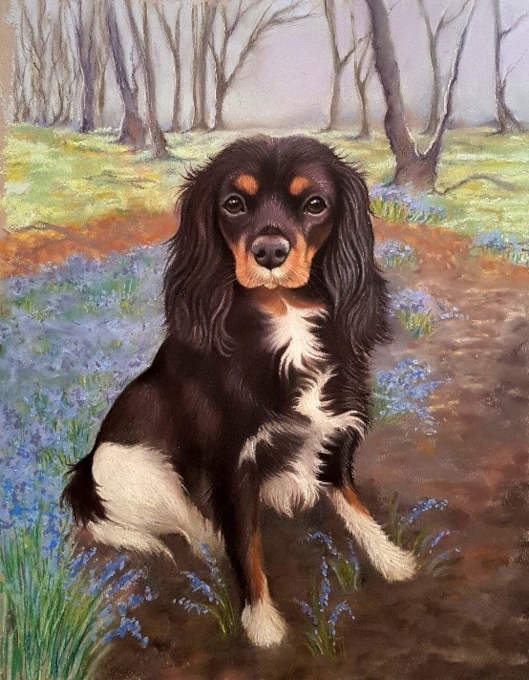
cavalier dog portrait in a woodland scene
Sometimes owners request a favourite walking spot or meaningful location. If the reference photograph is taken outdoors, I can work directly from it, adjusting:
• Composition
• Lighting
• Colour harmony
This ensures the portrait feels cohesive rather than photographic.
Group Portrait Backgrounds

"Daisy and Poppy" (pastels, 2015)
It is also possible to combine references — using one image for the subject and another for the setting — allowing for flexibility in pose and environment.
For example, this beach scene was created from multiple references. A cohesion to the work is created by subtly echoing the light pink tones found in the dogs coats with the pebbles and whispy colours of the clouds.
Interior Backgrounds for Portraits
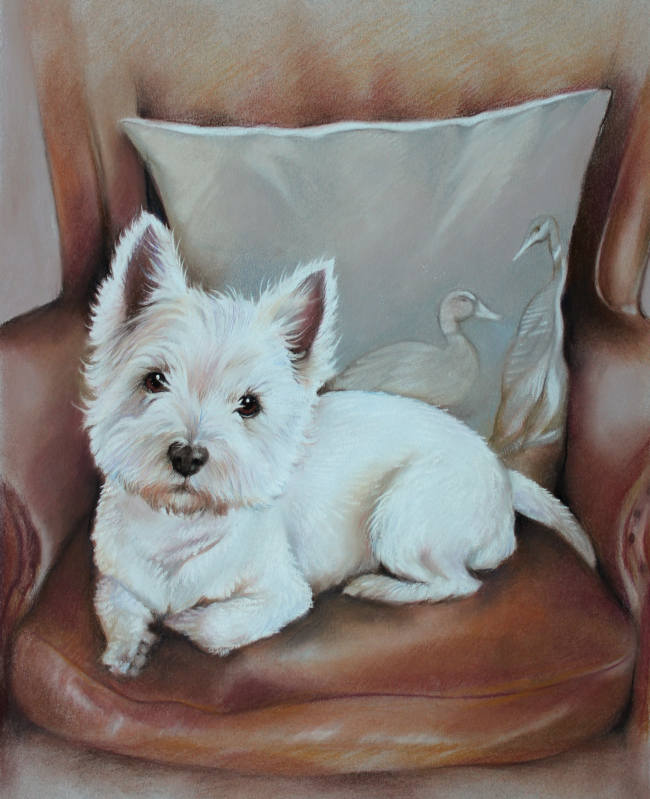
westie dog relaxing on armchair
Backgrounds for pet portraits don’t have to be outdoors.
Interior settings can create warmth and intimacy — a favourite armchair, a hallway bathed in light, or a cosy fireside setting.
When working with interiors:.
• I often combine two references.
• I ensure there is grounding shadow beneath the subject.
• I maintain tonal contrast so light coats don’t disappear into light furnishings.
Interior portraits are particularly lovely for older dogs or memorial pieces, as they capture a sense of home.
Creative and Bespoke Backgrounds
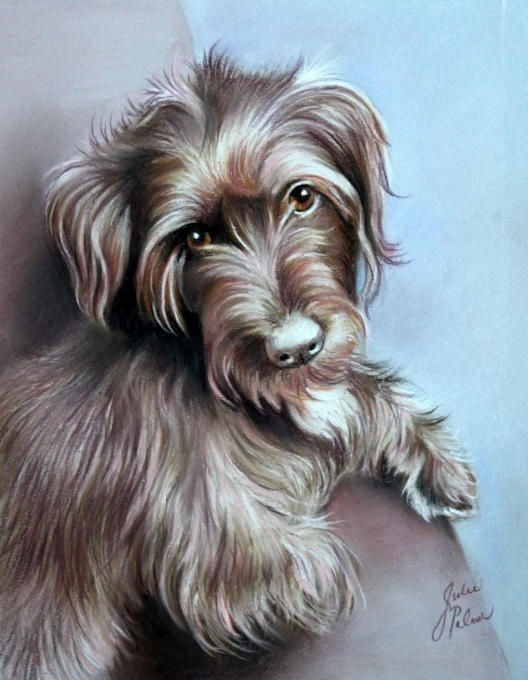
dog portrait on abstract background
Occasionally a portrait calls for something slightly more unusual — perhaps a different viewpoint or a more contemporary feel.
Looking down at a reclining dog, for instance, may require a more abstracted background. In such cases, I select colours that provide tonal contrast while complementing the coat — perhaps a cool blue against warm greys and browns as in this example.
These bespoke works sit somewhere between traditional portraiture and modern composition, and they can be especially striking.
How to Choose the Best Background for a Pet Portrait
If you’re deciding between options, here are a few gentle guidelines:.
• For timeless elegance: choose a plain background.
• For softness and mood: choose atmospheric.
• For story and context: choose scenic.
• For meaningful locations: consider a specific setting.
And if you’re unsure, I’m always happy to advise. Sometimes the coat colour, lighting of your reference photo, or the expression of your pet naturally suggests the most suitable direction.
Final Thoughts
The best backgrounds for portraits are those that support the subject rather than compete with it. A background should never overpower; it should quietly enhance.
Whether you are exploring pet portrait background ideas as an artist, or considering commissioning a portrait of your own dog, cat or horse, thoughtful background choices can transform a good portrait into a truly special one.
If you would like advice on what might suit your own pet, you’re very welcome to get in touch by using my contact box below.
(Lisa Marlor)

Contact Julie
If you would like to discuss a portrait, please use the enquiry form opposite, email your photographs for guidance, or telephone me directly on (01243) 773123.